
Online Coaching Is Real Coaching: The Human Connection Hasn’t Gone Anywhere
Still charging per session? Online coaching isn’t a downgrade from in-person coaching—it’s a more flexible, more connected evolution of what great coaching has always been.
There is a persistent misconception that online fitness coaching is somehow less “real” than in-person coaching, that digital platforms dilute the human connection, the accountability, and the coaching process itself. That is not only outdated thinking. It is wrong!
Online coaching, when done correctly, is not an inferior substitute for in-person coaching. It is the same practice of guiding, teaching, and supporting another human being toward a goal. The only real difference is where and how the relationship unfolds. The barbell, the program, and the accountability still matter, but what matters most is the relationship between coach and client. That part has not changed; it has evolved.
Coaching Is About People, Not Proximity
At its core, coaching is a human service. It is about understanding an individual—their goals, fears, habits, and barriers—and guiding them through the messy, nonlinear process of improvement. Nothing about that process depends on physical proximity. It depends on communication, trust, and follow-through.
When online coaching first emerged, it was often portrayed as transactional: a client gets a PDF program or an app login, and that’s it. But that was never coaching. True coaching involves feedback, accountability, problem-solving, and education. Online or not, that process still requires a coach to know their client deeply and interact with them regularly.
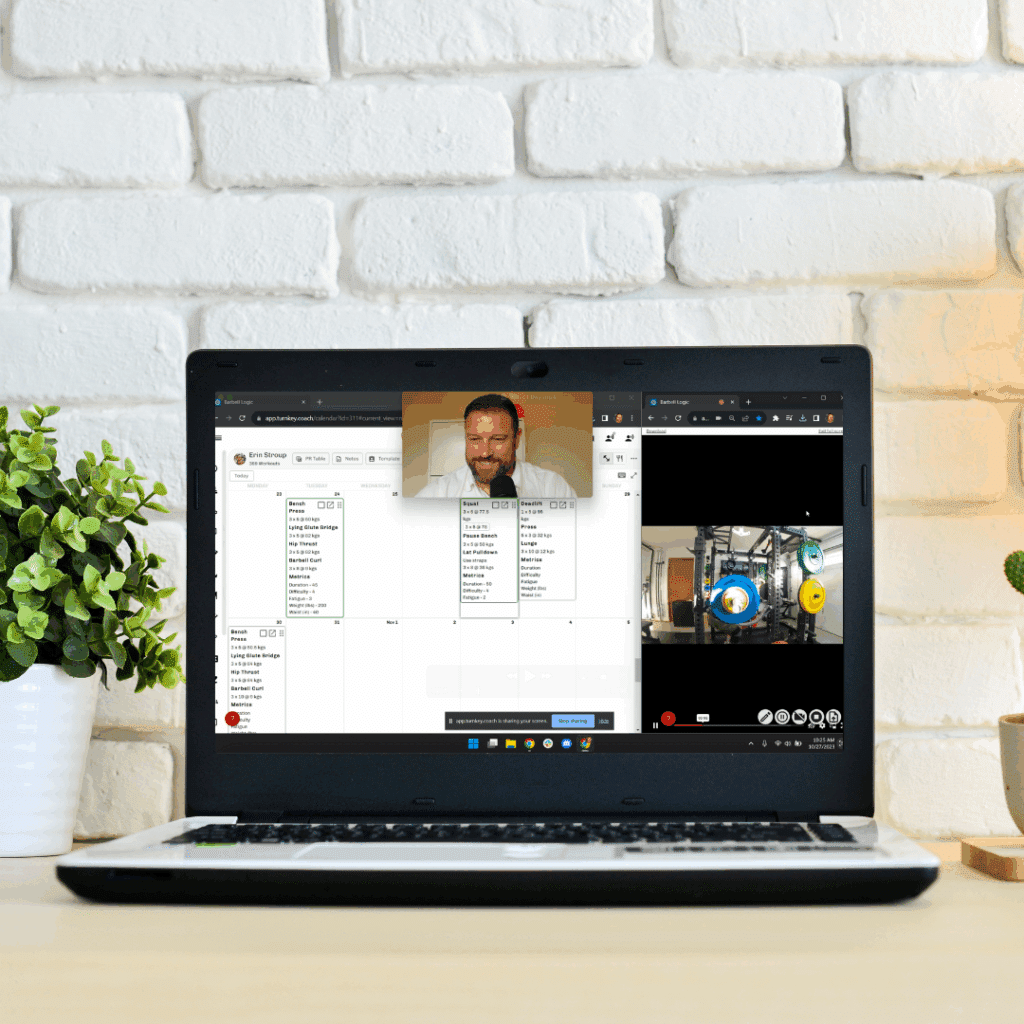
The digital medium can actually enhance the coaching relationship. Video check-ins, voice memos, screen shares, and in-app feedback loops make it easier to maintain communication and context without the time and logistical constraints of in-person sessions. In many cases, online coaches have more interaction with their clients week to week than a personal trainer who sees someone twice a week in the gym.
Same Skills, Different Tools
Good coaches do not just count reps—they read people. They know how to cue movement, manage expectations, and help clients navigate setbacks. Those skills transfer perfectly to an online environment. They just require different tools.
Instead of giving a real-time cue in the middle of a squat set, an online coach might use video review. The client records a set, uploads it to their platform, and the coach provides detailed visual feedback with timestamps, annotations, and voiceover explanations. That level of clarity is sometimes better than what a client would get in person, where cues can get lost in the intensity of the moment.
Instead of chatting between sets, an online coach stays connected throughout the week, offering plenty of opportunities to discuss how training, sleep, stress, and nutrition are going. These asynchronous conversations often lead to more thoughtful reflection. Clients have time to process, and coaches can respond deliberately instead of reactively.
And instead of being tied to a specific time slot, both coach and client gain flexibility. That makes consistency more achievable—a critical variable for long-term progress.
The Personal Connection Is Still the Foundation
The idea that online coaching is less “personal” misses the meaning of personalization. It does not mean standing next to someone while they train. It means understanding what that person needs and adapting your coaching to fit them.
An online coach still builds trust through communication, empathy, and reliability. They still celebrate wins, troubleshoot setbacks, and hold clients accountable to their commitments. They still know when to push and when to pull back. Those are human skills, not physical ones.
In fact, online coaching can often foster deeper communication. Without the noise of a busy gym or the pressure of a ticking clock, clients tend to open up more in written or recorded messages. They share what is really going on: the late nights, the family stress, the self-doubt. That honesty allows a coach to coach the whole person, not just their squat form.
When the relationship is strong, the medium does not matter. Clients feel seen, heard, and supported, and that’s what defines good coaching.
Convenience Without Compromise
One of the biggest advantages of online coaching is its flexibility. Clients are not bound to a coach’s schedule or a gym’s location. They can train when it fits their life, in the environment that works best for them. That makes coaching accessible to people who might never have been able to work with a great coach otherwise because of geography, time constraints, or financial limitations.
For coaches, the flexibility means they can support more people without burning out. They can structure their time around higher-value tasks—program design, feedback, and communication—rather than logistical coordination. The result is a model that is not only sustainable but also often produces better client retention and outcomes.
Convenience is not the enemy of quality. It is an enabler of consistency, and consistency is what drives results.
The Future of Coaching Is Hybrid
The debate between “online” and “in-person” coaching is quickly becoming irrelevant. The best coaches are integrating both. They might meet clients in person for assessments, workshops, or events, but rely on digital systems for ongoing support, feedback, and accountability.
What matters is not the medium. It is the method. Coaches who can build relationships, communicate clearly, and deliver personalized guidance will thrive regardless of where the interaction happens. Clients are not looking for a training format. They are looking for results, and for someone to help them get there.
Online coaching is not a lesser version of “real” coaching. It is coaching evolved. It allows for more consistent communication, more thoughtful feedback, and more personalized support, delivered in a way that fits modern life.
The human connection that defines great coaching has not disappeared. It is still there, just transmitted through screens, messages, and videos instead of handshakes and clipboards. The tools have changed, but the heart of the work has not.