Client Relapse: How Coaches Can Turn Setbacks Into Lasting Results
Health and wellness coach Jeb Stuart Johnston explains why client relapse is a signal to build new skills, not proof that you or your client failed.
Every coach has had this client. They start strong, hit their check-ins, lose the first ten pounds, and send you excited messages about how their clothes fit. Then a work trip happens, or a stressful month, or a holiday weekend, and suddenly the check-ins stop. When they finally resurface, they are apologetic, embarrassed, and several pounds heavier. It is easy to read client relapse as a failure, either theirs for not following the plan or yours for not building a better one. Jeb Stuart Johnston thinks both readings miss the point.
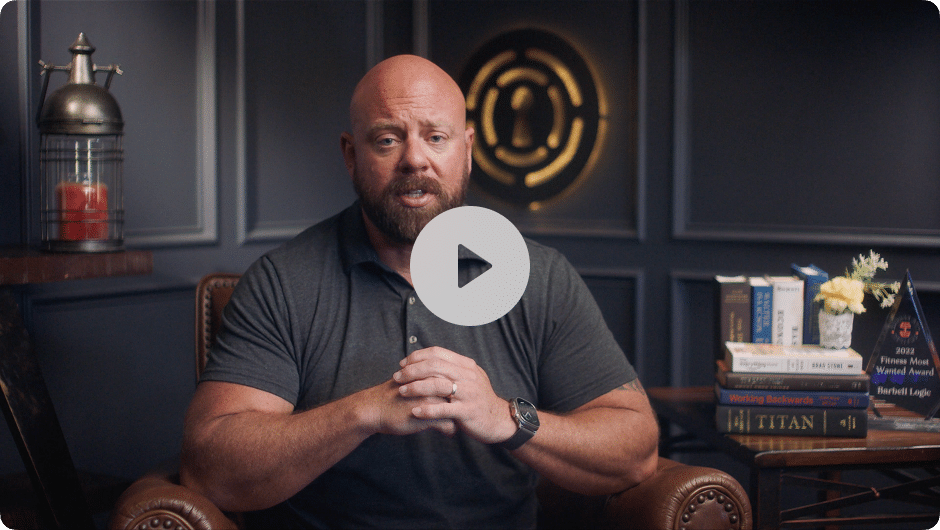
Jeb is a National Board Certified Health and Wellness Coach and the founder of Food on the Mind. His path into coaching was anything but linear. He was an opera singer and actor, then a nightclub bartender, then a hairdresser working fashion weeks, then a personal trainer who opened a private studio. Eventually he became a macro coach at Stronger U, managing as many as 250 nutrition clients at once. That volume taught him something uncomfortable: very few clients became long-term success stories. Most of the people who hired him had already lost weight before. They just had not kept it off. In this Business of Coaching Workshop, Jeb joined Andrew Jackson to explain how that realization changed the way he coaches, and what coaches can do differently when a client falls off.
Keep reading. It's free.
Enter your details to unlock the rest of this article and join the Business of Coaching Workshop.
Why Most Nutrition Clients Do Not Keep Their Results
The typical nutrition coaching model starts with a diet, which is why so many coaches are now learning to coach habits, not just macros. The coach sets calories or macros, the client follows them, and the scale moves. Maintenance is treated as the reward at the end, something you figure out once the goal weight shows up. Jeb noticed that this order produced plenty of short-term wins and very few lasting ones. Clients could follow a plan while they were motivated and supervised, but they had never built the skills needed to live without one.
So Jeb flipped the model. He starts clients with maintenance skills first. Before asking someone to push hard on a deficit, he wants them to know how to eat in a way they can sustain, how to recover from a bad day, and how to notice what is driving their choices. Fat loss becomes something they layer on top of a stable foundation rather than a sprint they hope to survive. It is a slower start, but it addresses the actual reason most clients come back to coaching in the first place: they know how to lose weight, and they do not know how to keep it off.
Behind that shift is a simple belief about the coaching relationship. Jeb treats every client as the expert on themselves. The coach brings knowledge, structure, and perspective, but the client is the one who knows what their days actually look like, what they are willing to change, and what has failed before. Jeb describes the coach as a co-pilot. You are not flying the plane for them. You are helping them learn to fly it.
Awareness, Physiology, Then Skills
Open-ended coaching can sound vague, so Andrew pushed on whether this approach still needs a system. Jeb’s answer was yes, and he walked through the model he uses. It moves in three stages: awareness, physiology, and skills.
Awareness comes first. Many clients do not actually know what they eat, when they eat it, or what tends to come right before a binge or a slide. Tracking, journaling, and honest check-ins are tools for building that awareness, not ends in themselves. Physiology comes next. A client who is chronically underfed, sleep deprived, or stressed is fighting their own body, and no amount of willpower will make that fight easy. Getting them to a place of physiological safety, with adequate food and recovery, lowers the pressure that drives so much erratic eating. Only then does the work move to cognitive skills: planning, handling difficult situations, talking back to unhelpful thoughts, and making decisions that hold up under stress.
Jeb also made a point that applies to every coach, regardless of niche. You should map your own coaching model, write it down, and expect it to change. He compared it to how a biologist observes and classifies. Watch what actually happens with your clients, name the patterns, and refine your model as you learn. A coach who can explain their process is easier to trust, easier to hire, and much better at diagnosing what went wrong when a client gets stuck. A clearly defined signature coaching method also gives clients a reason to stay.
What Coaches Miss When a Client Relapses
This is where Jeb’s perspective is most useful. When a client relapses, the reflex for most coaches is to fix the plan. Tighten the macros, add more check-ins, simplify the meals, or have a stern conversation about commitment. Sometimes those changes help. But Jeb argues that a relapse is usually not a sign that the plan was wrong. It is a sign that the client has reached a new plateau that requires a higher skill set.
He uses the image of a spiral staircase. From above, it looks like you are walking in circles and returning to the same place. From the side, you can see that each loop is higher than the last. A client who falls back into old eating habits after six months of progress is not starting over. They are meeting the same challenge at a higher level, with more awareness and more tools than they had the first time. That is what mastery looks like in any skill. You do not get better by never struggling. You get better by practicing through the struggle.
That reframe changes the coaching conversation, much like coaching through missed workouts does for training clients. Instead of treating relapse as something to be ashamed of, the coach can treat it as practice. What happened? What was going on right before? What did you already handle better than you would have a year ago? What skill would have helped this time? Jeb also emphasized that belief matters more than cognitive understanding here. A client can understand perfectly well that one bad weekend does not erase their progress and still feel like it does. Part of the coach’s job is helping the client actually believe that setbacks are part of the process, and that belief usually comes from experiencing a few recoveries, not from hearing an explanation.
When Structure Helps and When It Becomes a Prison
Discipline and structure came up repeatedly in the conversation, and Jeb drew a useful distinction. Structure should protect the lane. It keeps the client moving in the right direction when life gets noisy, and it removes a lot of decisions that would otherwise drain their energy. Jeb is a big fan of automating food decisions for exactly this reason. Repeating meals, having default options, and planning ahead free up mental space for the decisions that actually matter.
But structure can also turn into a prison. When a client feels that any deviation from the plan is a failure, rigidity becomes the thing that triggers the relapse. The first missed target leads to an all-or-nothing reaction, and the entire week falls apart. Jeb’s point is that the tools are just tools. Macros, tracking apps, and meal plans are useful when they help the client build consistency and awareness. They become a problem when the client starts serving the tool instead of the tool serving the client.
He offered another reframe that many coaches will find helpful: a client’s “bad” behavior is often a solution to a different problem. Late-night snacking might be the only part of the day that feels like rest. Skipping check-ins might be a way to avoid feeling judged. If you only attack the behavior, you leave the real problem untouched, and the client will find another way to solve it. If you get curious about what the behavior is doing for them, you can help them find a better solution.
Difficult Conversations Make Better Coaches
A large part of Jeb’s work now involves coaching coaches, and one of the skills he focuses on is the difficult conversation. Coaches avoid these conversations constantly. They do not want to tell a client that their effort is not matching their goals, they do not want to raise prices, and they do not want to address the client who keeps disappearing. Avoiding those conversations feels kinder in the moment, but it usually costs both the client and the business.
To practice, Jeb draws on his theater background. He has coaches role-play difficult client scenarios and even write client characters, complete with motivations and objections, so they can rehearse before the real conversation happens. It may feel awkward at first, but it is the same principle coaches use with their own clients: skills are built through practice, not just understanding. Jeb noted that the coaches and business owners who get comfortable with difficult conversations tend to build stronger relationships with clients, staff, and even their families.
If coaches take one tool from the episode, Jeb wants it to be this: name the request. Many hard conversations go sideways because nobody says clearly what they are asking for. The coach hints, the client guesses, and both walk away frustrated. Naming the request means stating plainly what you want the other person to do. “I’d like you to send me your food log by Sunday night.” “I’d like us to talk about what happened over the last two weeks.” It sounds simple, but it removes a surprising amount of tension and gives the other person something concrete to respond to.
The Client Who Ghosts Out of Embarrassment
During the live Q&A, the group brought real client situations to Jeb. One coach described a client who kept relapsing on nutrition despite understanding exactly what to do. Jeb’s advice echoed the rest of the conversation. Do not niche down too early or assume you already know the cause. Look at what the behavior is solving. Reduce the number of food decisions the client has to make. And remember that results ultimately belong to the client. Outcomes across any group of clients will fall along a bell curve, and a coach’s job is to give each person the best chance, not to carry the full weight of every result.
Dan raised another familiar scenario: a client who goes silent after a rough stretch because they are embarrassed. Jeb pointed out that ghosting, one of the most common reasons online coaching clients leave, is often a relapse of its own, and it deserves the same curiosity. The client is not avoiding the coach because they do not value the coaching. They are avoiding the feeling of disappointing someone. A short, warm message that makes it safe to come back, without guilt or a lecture, does more than any accountability speech. Jeb compared relapse to pain. Pain is not the problem itself. It is a signal that something needs attention. When coaches treat relapse and silence as signals rather than verdicts, clients are far more likely to return.
Jeb also offered a reminder that may surprise some coaches. The client who drives you the craziest is sometimes the one who stays with you for ten years. Difficult clients often need coaching the most, and when they finally feel understood, they become remarkably loyal. That is a big part of keeping the right clients longer.
Why Human Coaching Still Matters
The conversation also touched on artificial intelligence and whether it will replace coaches. Jeb was blunt. AI will replace bad coaches, and that is fine. If your coaching consists of handing out macro targets and generic meal plans, software can already do that cheaply. The better move is to use AI to save time and coach better, not to replace the relationship. What AI cannot easily replace is a coach who understands a client’s history, notices the patterns behind their choices, helps them believe they can recover from setbacks, and has the hard conversations when they are needed.
That is the real lesson behind Jeb’s approach to client relapse. The coaches who keep clients for years are not the ones with the strictest plans. They are the ones who help clients build skills, treat setbacks as practice, and stay curious instead of judgmental when things go sideways. Relapse is going to happen. The question is whether your coaching is built to help clients learn from it.
If you want to learn more from Jeb, visit Food on the Mind or follow him on Instagram.
If your clients keep falling off, the fix is not a stricter plan but a deeper coaching relationship that teaches them to practice through setbacks.
Course
Coaching Rediscovered
Build a profitable coaching practice without losing freedom. This course shows you how to 5X your earnings without sacrificing quality.
Start course for free